The Woven Torah Project
Discovering the Torah's Multilayered Literary Architecture
Rather than viewing the text as a simple sequence of stories and laws, we invite you to discover it as an intricate tapestry with meaningful patterns that become visible at multiple levels.
The Architecture of the Torah — OverviewA Revolutionary Approach to Torah Study
The Woven Torah project presents a fresh paradigm for exploring the Torah's literary structure. Based on 40 years of peer-reviewed research, this approach reveals sophisticated two-dimensional patterns that have been hidden in plain sight for millennia—patterns that only become visible when we read the text as a woven composition rather than a linear sequence.
The Three Levels of Weaving
The same weaving paradigm operates at three integrated scales throughout the Torah:
The Complete Torah
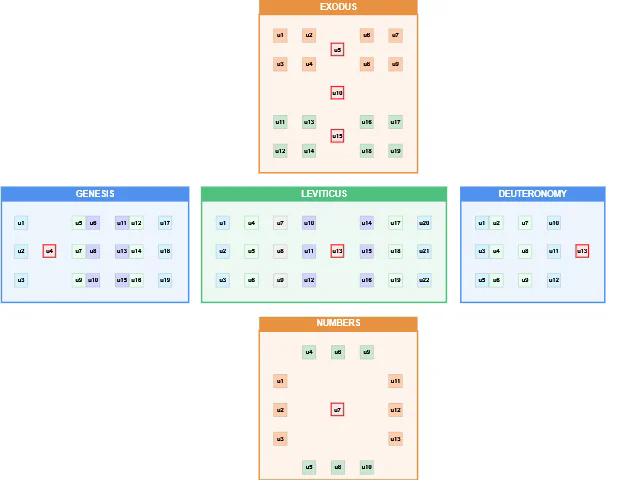
The five books form a woven structure with horizontal threads (Genesis → Leviticus → Deuteronomy) and vertical threads (Exodus → Leviticus → Numbers), with Leviticus at the crucial intersection point.
Individual Books
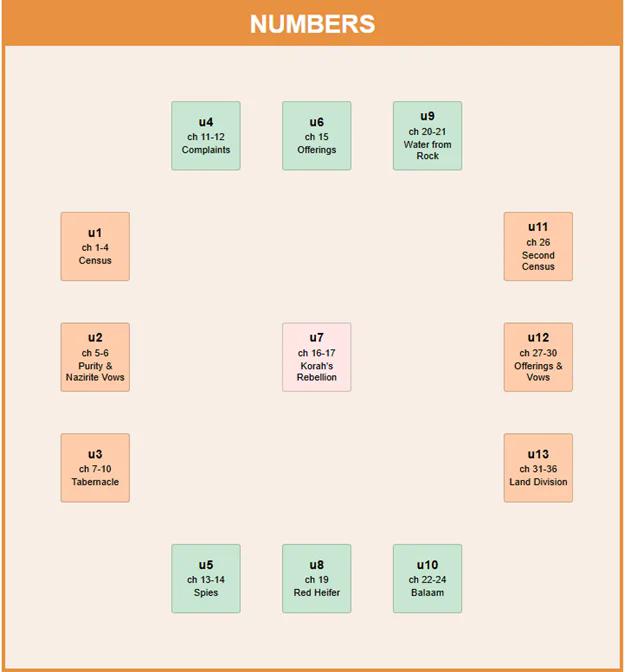
Each book contains its own unique woven structure of literary units. Genesis has 19 units organized in a three-ring concentric pattern. Each book reveals distinctive architectural principles.
Literary Units
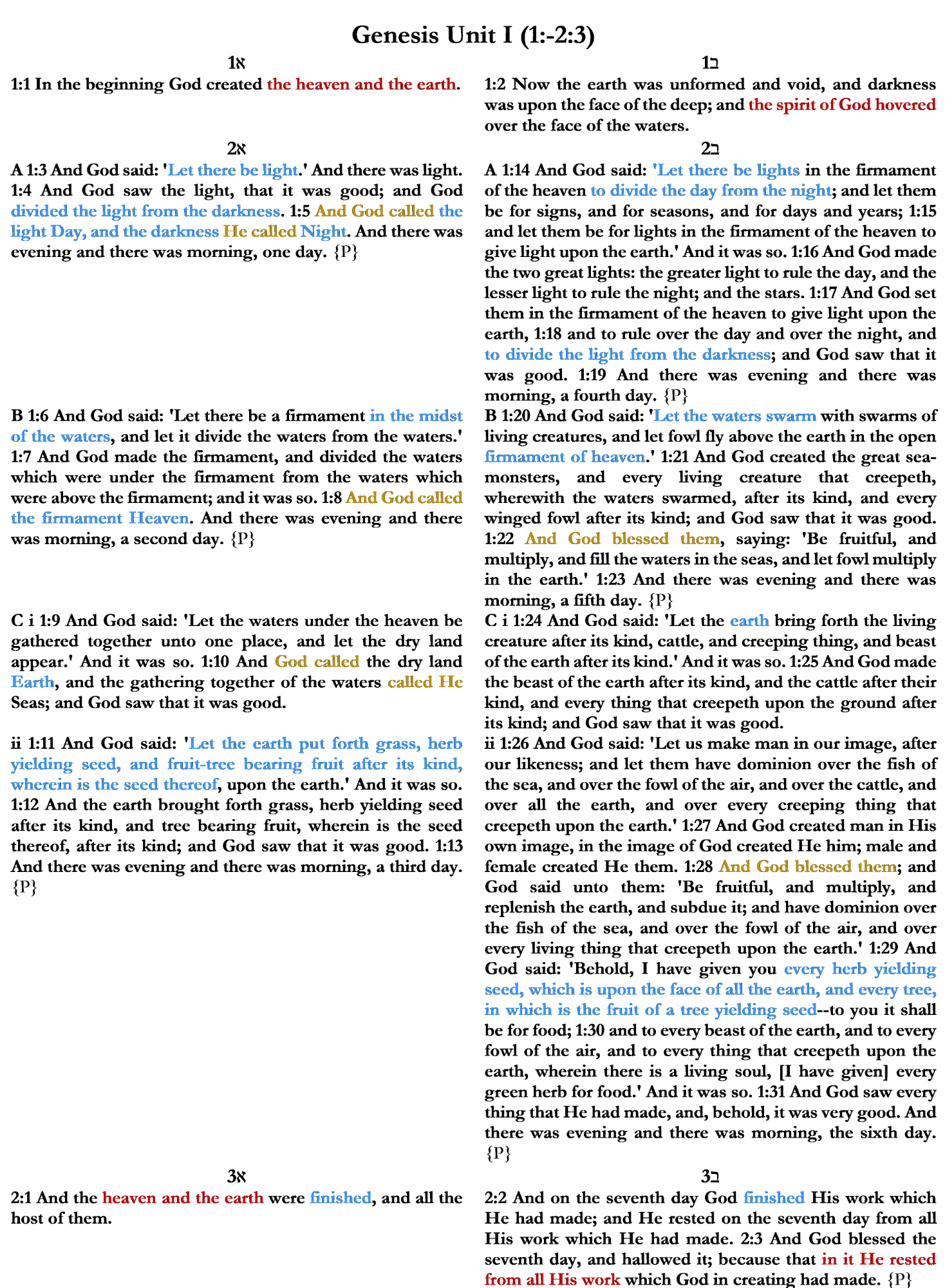
Each unit is itself a two-dimensional weave with rows and columns creating a coordinate system of meaning. Parallel elements reveal theological concepts through their structural positions.
What's Available Now on Chaver.com
Genesis: Complete Analysis
📍 Visual Overview: Interactive Genesis Map
Five-Part Commentary Series:
- Overview - Introduction to woven reading
- Part A: The Units - All 19 units identified
- Part B: The Map - Architectural relationships
- Part C: The Three Rows - Row analysis
- Part D: Architecture & Meaning - Comprehensive analysis
Individual Unit Maps: Interactive structure for each of 19 units
In Development
Individual Unit Commentaries:
- Detailed analysis of each Genesis unit
- Commentary following James Kugel's conversational scholarly style
- Integration with the five-part series framework
- Progressive rollout throughout 2025
Planned Development
Remaining Torah Books:
- Exodus (22 units)
- Leviticus (16 units)
- Numbers (13 units)
- Deuteronomy (16 units)
- Complete database of all 86 units
Interactive Resources at Woven-Torah.com
The Woven-Torah.com site provides complementary visual tools for exploring the Torah's structure:
📊 The Torah Map
Interactive visualization showing how all five books work together as a unified whole, with color-coded relationships and structural patterns.
Explore Torah Map📖 Individual Book Maps
Detailed maps for each of the five books displaying their unique woven structures and internal unit relationships.
View Book Maps🔍 Literary Unit Maps
The actual Torah text presented in two-dimensional format with color-coded patterns and parallel elements highlighted.
Browse Unit MapsCore Principles of the Woven Torah Approach
Scholarly Rigor
Analysis grounded in observable textual evidence, published in peer-reviewed journals including Journal of Biblical Literature.
Natural Boundaries
Units identified through internal literary markers (toledot formulas, death notices, envelope structures) rather than medieval chapter divisions.
Two-Dimensional Reading
The Torah functions as both linear narrative (exoteric) and architectural matrix (esoteric), with meaning created through structural position.
Pattern Recognition
Sophisticated patterns emerge at multiple scales: divine name distribution, envelope structures, concentric rings, and systematic correspondences.
Accessible Scholarship
James Kugel's conversational methodology makes rigorous academic analysis approachable for serious students at all levels.
Visual Tools
Interactive maps and color-coded texts help reveal patterns invisible to sequential reading alone.
The Hidden Design
One of the most remarkable discoveries is how Torah books mirror each other in meaningful ways. Genesis and Deuteronomy balance each other like bookends, with Leviticus at the center forming a pivot point. Similarly, Exodus and Numbers create a balanced frame for the wilderness journey.
This isn't arbitrary arrangement—the structure itself carries theological meaning. Concentric rings around central cores contain essential theological principles. The very organization of the text embodies metaphysical concepts about God's relationship with creation and with Israel.
A Natural Structure Revealed
The Woven Torah approach doesn't impose artificial divisions on the text. Instead, it reveals the Torah's inherent structure through internal literary markers:
- Toledot formulas ("These are the generations of...") mark major unit boundaries
- Death notices often signal transitions between units
- Envelope structures (repeated phrases at beginning and end) demonstrate deliberate composition
- Divine name patterns (YHWH vs. Elohim) correlate with structural position
- Parallel terminology creates vertical connections between units
These aren't speculative claims—they're observable patterns documented through rigorous textual analysis and published in academic venues.
Experience the Torah Anew
The Woven Torah approach isn't just for scholars—it's for anyone who wants to discover new dimensions in the Torah. By recognizing the sophisticated weaving patterns at all three levels, readers of all backgrounds can gain fresh insights and appreciate the unity and purpose of the Torah in ways that linear reading alone cannot reveal.
"The study of the Torah as a tapestry reveals interconnections that transform our understanding of its message at every level."
Get Started
📚 Read the Commentary
Begin with the Genesis five-part series to understand the methodology and see it applied to Torah's opening book.
Start with Genesis🗺️ Explore the Maps
Visual learners can start with the interactive maps at woven-torah.com to see the structure before diving into analysis.
Visit Woven-Torah.com📖 Download the Book
Get the complete Torah text in woven format plus 40 years of research in Before Chapter and Verse.
Free PDF AvailableAbout the Research
The Woven Torah approach represents 40 years of systematic literary analysis by Moshe Kline, a graduate of St. John's College and Yeshiva University. His research has been published in:
- Journal of Biblical Literature (2025) - Premier academic journal in biblical studies
- Society of Biblical Literature Press (2015) - Leading publisher of biblical scholarship
- Journal of Hebrew Scriptures (2008) - Peer-reviewed open-access journal
The work has been praised by scholars across denominational lines for its rigorous methodology and fresh insights into the Torah's literary sophistication.